Groupthink adds calendar sync and bookable availability links

Danielle Morrill
Update, October 2026: calendars, calendar sync, availability and booking links are now set up under Today → Calendar & booking, not in Settings.
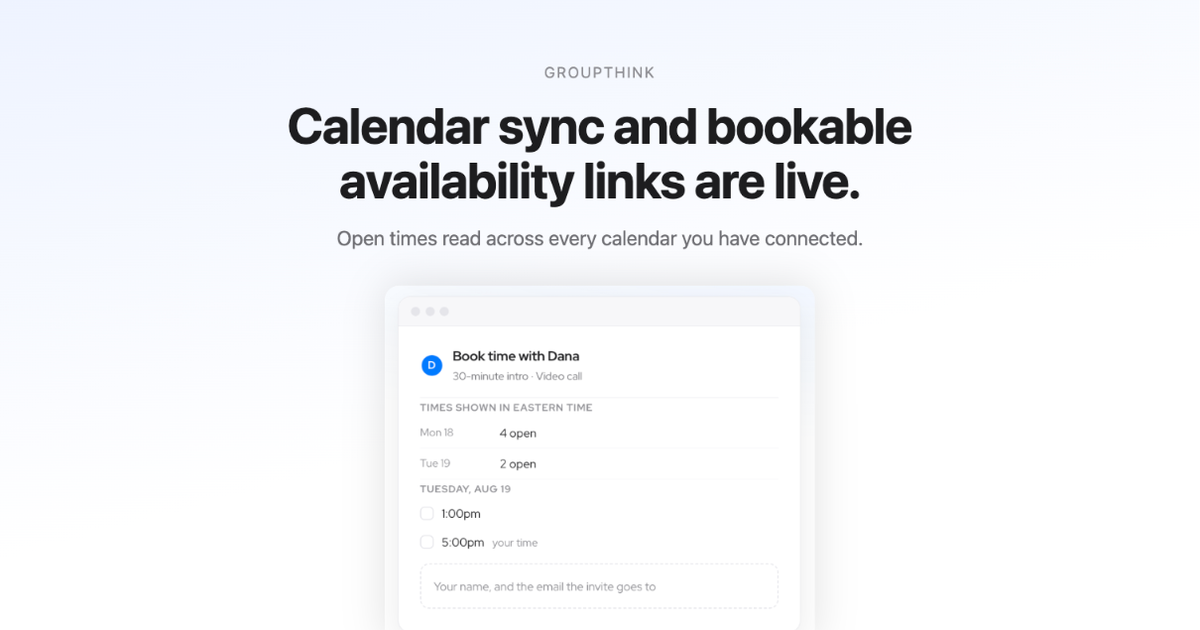
Groupthink users can now share open times computed across every calendar they have connected, and let anyone book without an account. The meeting, and the person who booked it, join the record automatically.
Groupthink, which keeps a memory of the people in someone’s life and work and builds it from their interactions, today announced calendar sync and bookable availability links, bringing scheduling into the same system that captures and remembers the meetings it creates.
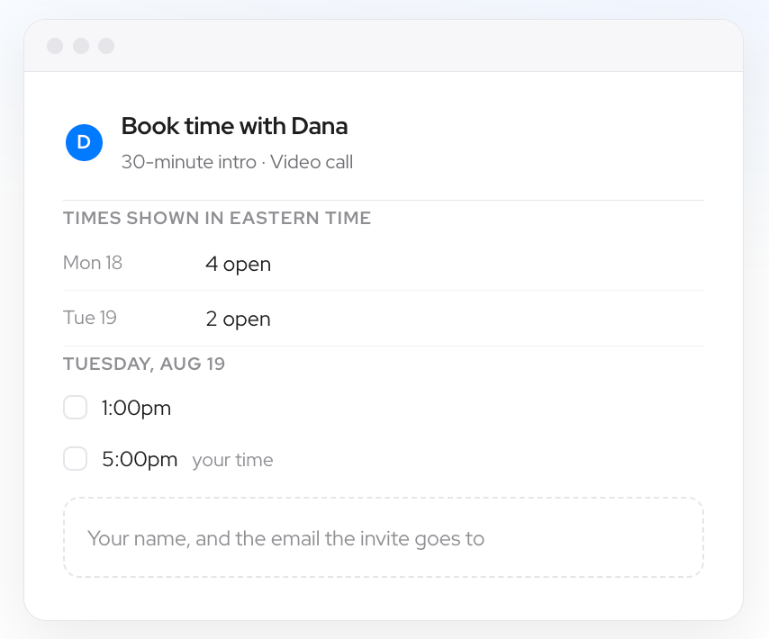
Availability links let a Groupthink user publish named booking links, each with its own length, buffer, minimum notice, booking window, and daily cap. Someone with no Groupthink account opens the link, sees open times rendered in their own timezone, picks one, and leaves a name and email. The meeting is written to the user’s calendar with the visitor invited, and bookings onto a Google calendar carry a Meet link. Open times are computed across every calendar the user has connected, so an appointment on a personal calendar prevents a client booking over it on a work one. Users who would rather not send a link can copy their next week of open times as plain text and paste it into a reply, now one click from anywhere in the app via the sidebar’s New menu. Setup is documented in availability and booking links.
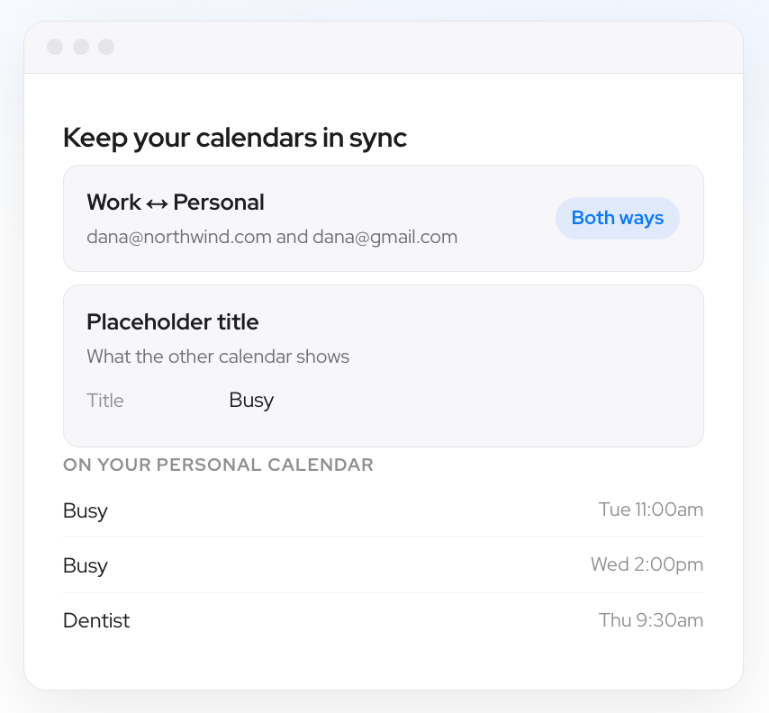
Calendar sync pairs any two of a user’s connected calendars and mirrors busy time between them as a masked placeholder. Titles, descriptions, attendees, locations, and conferencing links do not cross over, so the receiving calendar carries the hour and nothing else. Events marked free and events the user declined are skipped, since mirroring those would represent unavailability the user never claimed. Disabling a pair removes the placeholders Groupthink wrote rather than leaving them behind. The walkthrough is in keeping two calendars in sync.
A booking made through Groupthink enters the same ingestion path as every other interaction. The person who booked becomes a relationship record, and the meeting joins the history the user holds on them, where it is captured, mined for commitments, and measured against any check-in cadence the user has set. Standalone scheduling tools write the event and retain nothing about the person. What happens after a booking covers what Groupthink keeps.
Both are available on every Groupthink plan, including the 30 day free trial. Start a trial and send your first booking link today.
“Booking a meeting is an act of intent. Someone is telling you they want to give you their time and attention, and every scheduling tool throws that away. We built ours inside the record, so a booking starts the relationship instead of sitting next to it,” said Elle Morrill, cofounder and CEO of Groupthink.
Groupthink introduced relationship cadences in August and commitment capture earlier this month, both of which act on the record a booking now feeds. Calendar sync and availability links are available today on the web and in the Groupthink desktop app.